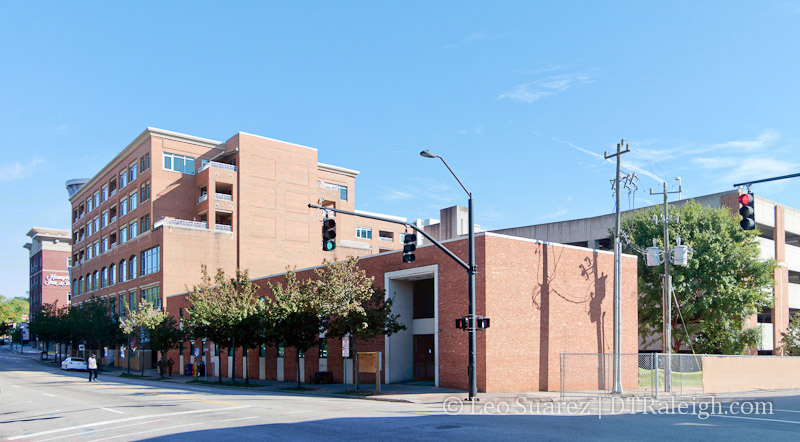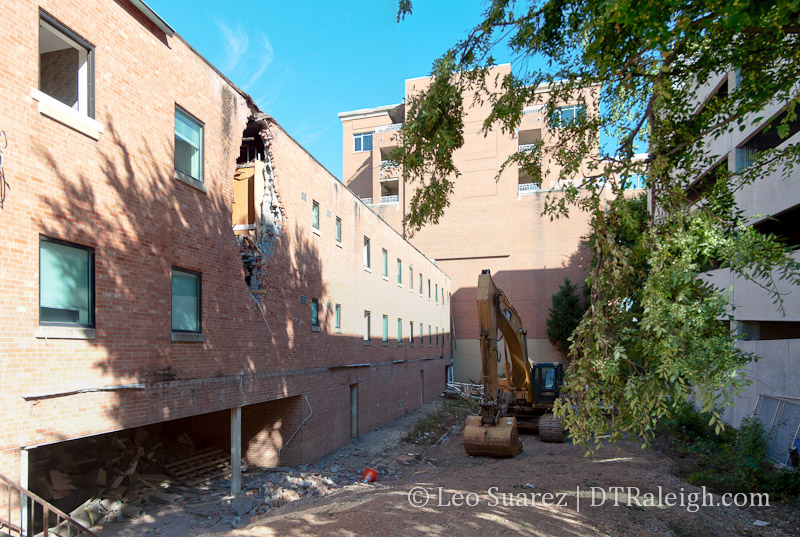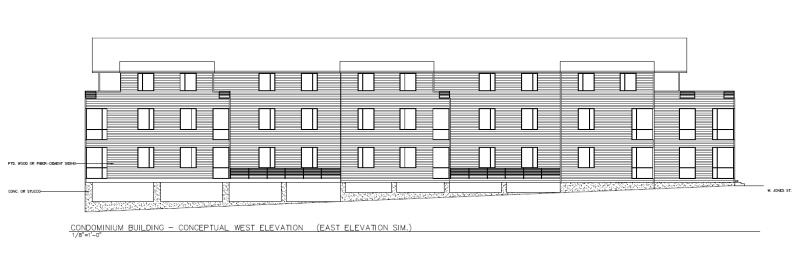
The apartments currently under construction at 425 Boylan.

The apartments currently under construction at 425 Boylan.

Blount Street at Hargett Street
On July 16, 2013, the Raleigh City Council approved the Blount/Person Street Corridor study. The project that includes the two streets from Capital Boulevard down to I-40 along Hammond Road has been ongoing since October 2012. The result could be more multi-modal streets that are phased in as funding becomes available.
There are well over 1000 pages of analysis, renderings, and overviews on the project, all available on the city’s website. I thought I’d take the time to skim through and put some highlights of the project here on the blog.
One important thing to be aware of is that funding for Phase 1 is included in the Transportation Bond coming to this October’s ballot. That will pay for a re-striping project of Blount and Person Streets that lays the foundation for the One-Way Road Diet plan.
Read on for more details.
Overview and Project Area
As mentioned earlier, the project area starts in the north along Atlantic Avenue near Capital Boulevard, continues down Wake Forest Road to the one-way pairs of Blount/Person Streets and ends at Hammond Road through I-40.
Below is map of the area taken from the documents. It’s a lengthy map so click to expand/collapse it.
Map of the Blount/Person Street Corridor Study
During the July 16 city council meeting, Grant Meacci from city planning gave an overview to the council. You can watch it in the video below.
One-way versus Two-Way
The report’s findings are based around some high-level themes which include:
With these themes in mind, two design alternatives have come out that could accomplish the goals of the study.
In addition to studying both of these alternatives, the report states that they should not be seen as mutually exclusive but rather steps towards achieving the vision for the corridor. So for example the one-way road diet could be put in now but later, after feedback from the community and further analysis, the two-way restoration could be implemented.
The report has a great one-page comparison chart that states the potential negative impacts as well as benefits of each approach. Click on it below to see it larger.
Alternatives of Blount/Person Street Corridor Study
To make this all happen, 3 phases are proposed.
The sections are broken out so it looks possible to fund them in even smaller steps if necessary.
Details and Renderings
Public participation was a key part of this project and hundreds of ideas and comments were submitted. The report has an exhaustive list of comments that were organized into themes, the ones that helped shape the ones mentioned above. Here are a sample.
Business & Economic Development
Traffic Mobility
Walkable & Multimodal
The report then gets into showing the different “layers” around the corridor including existing land use, popular destinations, open space, parks, and current redevelopment plans. This really shows you the mix of neighborhoods and historic resources that are present in this area.
No report is complete without a traffic analysis and the report has a mountain of information including traffic counts, travel time, and level of service. Looks like most of the downtown intersections show pretty good marks with the data taken in 2011.
The street design here is a mixed-bag of offerings with streets that have sidewalks and good urban form while others are lacking proper sidewalks. The worst areas were to the south near Bragg and Branch Street as well as to the north near Wake Forest Road and Atlantic Avenue.
For reference, each section’s current street design within the corridor has an accompanying rendering. For example, below is Blount Street from Edenton to South Street.
Current street cross-section.
Section 2 of the corridor study introduces us to some Street Design Guidelines. You don’t have to be an urban planner to follow this section but a lot of the proposed changes to the corridor will follow these principles. Topics include:
Outdoor cafe on bulb-out by Kaizer Rangwala, on Flickr
The next section of the report gets into the details of transitioning from current conditions to both the one-way road diet and/or the two-way restoration.
With roundabouts around Capital Boulevard to the north and improved intersections around Hoke Street to the south, there are also conceptual drawings of what the new Blount/Person streets could look like running through downtown Raleigh.
During the One-Way Road Diet plan, the following would be implemented on Blount/Person:
Before and after street cross-section.
The Two-Way Restoration plan has a lot going on. Refer to section 3 of the report to see the conceptual designs that include a few more roundabouts as well as possibly slimming down Person and Blount Streets to one-lane in each direction. I do want to re-iterate that further analysis is needed to get to that point but this report starts the conversation.
The study wraps up with the traffic analysis. You can dive even deeper into that with the over 1000+ page detailed traffic analysis report for the real municipal geeks out there. The analysis shows how a variety of intersections currently perform and how they are projected to perform under the proposed changes.

Crank Arm Brewing on Davie Street
It could be just me but the summer seems like a great time to open a restaurant in downtown Raleigh. Need to work all the kinks to get ready for the cooler temperatures. It could just be the timing though.
Anyway, with us deep into the summer season, here is the latest bit of restaurant news.
And finally, I don’t know anything about it but the last retail space in the PNC Plaza has some paper covering up the windows. There aren’t any signs but instead symbols of food. Take it with a grain of salt as to what could, or won’t, be coming in that space.

More positive retail news for downtown Raleigh. Nüvonivo will be opening within weeks in their new space on East Hargett Street. The online children’s clothing store is bringing its first retail space to the area and I was introduced, through email, to Ray Malouf, a member of the Nüvonivo team. He told me:
I joined the business in 2009 working with my father Abdallah, who has owned ECA since the 1980s, and in April of 2012, out of a small condo in Downtown, we launched our first retail concept online calling it nüvonivo (new-voh-nee-voh). Translated from French, the words nouveaux niveaux means New Levels, and that is what we want to bring to our customers everyday, new levels of quality, design, and customer service.
The family behind the business are downtown supporters and Ray mentioned to me that they feel they are helping with the downtown revitalization. Raleigh’s malls and shopping centers were considered but “we kept coming back to Downtown Raleigh.”
The location of the store isn’t an accident as the Marbles Kids Museum is less than a block away. Good luck to Ray and the team behind the new store. It sounds like a lot of work is going into cleaning up that space.

Last week, the latest edition of the Triangle Downtowner came out and my article about downtown living is there for your reading pleasure. In it, I talk about how residential living is really in its infancy in downtown Raleigh and how what we have today came from almost nothing.
In its entire history, downtown Raleigh never had the building stock to support the tens of thousands of urban residents needed for a critical mass. Oakwood, Boylan Heights and other surrounding neighborhoods of single-family homes were where the majority of close residents lived.
“Twenty years ago, Raleigh didn’t have any residential real estate in the city center” says Ann-Cabell Baum Andersen, owner-broker at The Glenwood Agency. “We’re just beginning the process of building out core but you can already feel the electricity on the streets.”
*Downtown Living, Vol. 9 Issue 6 Triangle Downtowner
Grab a paper copy of the latest Triangle Downtowner at a kiosk around downtown Raleigh or read it on Issuu, here.
Red Red Hat by dtraleigh, on Flickr
Red Hat’s new signage towers high over Wilmington Street.
Divisadero Parklet – SF Pavement to Parks by jeremyashaw, on Flickr
Raleigh’s Urban Design Center is hosting a meetup next week to discuss parklets. These ‘sidewalk extensions’ or ‘pop-up mini-parks’ are a new trend in urban areas that attempt to bring more public space to pedestrians. Wikipedia states:
A parklet is a small space serving as an extension of the sidewalk to provide amenities and green space for people using the street. It is typically the size of several parking spaces. Parklets typically extend out from the sidewalk at the level of the sidewalk to the width of the adjacent parking space, though some have been built at the level of the street with access from the sidewalk.
Parklets are intended for people. Parklets offer a place to stop, to sit, and to rest while taking in the activities of the street. In instances where a parklet is not intended to accommodate people, it may provide greenery, art, or some other visual amenity. A parklet may accommodate bicycle parking within it, or bicycle parking may be associated with it.
If you look at the photos in this post, you’ll see some examples of parklets in other cities.
According to the flyer for the event, attached at the bottom, the folks at the UDC will be presenting their preliminary research and want to get your feedback about parklets in Raleigh.
A big positive to having parklets is that it adds more space for pedestrians to sit and linger. Already an area with very low parkspace per citizen, downtown Raleigh doesn’t have room to add more parks in the traditional way so parklets, in combination with other more urban tactics, could be the solution.
There’s also an economic activity advantage because the shops and restaurants in downtown thrive with an active sidewalk life.
One negative is that public street space, more specifically on-street parking spaces, have to be given up for these parklets. While that might make public officials wary of parklets, citing concerns about loss of revenue, I question the reality of it. Does a few less on-street spaces really result in a loss of revenue?
In my opinion, I would think that it doesn’t matter since downtown currently has a gross oversupply of parking spaces in the decks. Hopefully the UDC has some thoughts on this and how other cities have addressed this fear.
Four Barrel Coffee Parklet by mark.hogan, on Flickr
Spring Street Parklets by waltarrrrr, on Flickr
Date/Time: Thurs., July 25 from 6 p.m. to 8 p.m.
220 Fayetteville Street
Raleigh, NC 27601
919-996-4637

SECU Tower on Salisbury Street
The SECU Tower on Salisbury Street looks very close to being finished. Walking by, you can see the lobby needs just a little more work before it’s done. This is my favorite modern building in downtown Raleigh.