Downtown Raleigh Hotel Scene Being Looked at in Upcoming Study

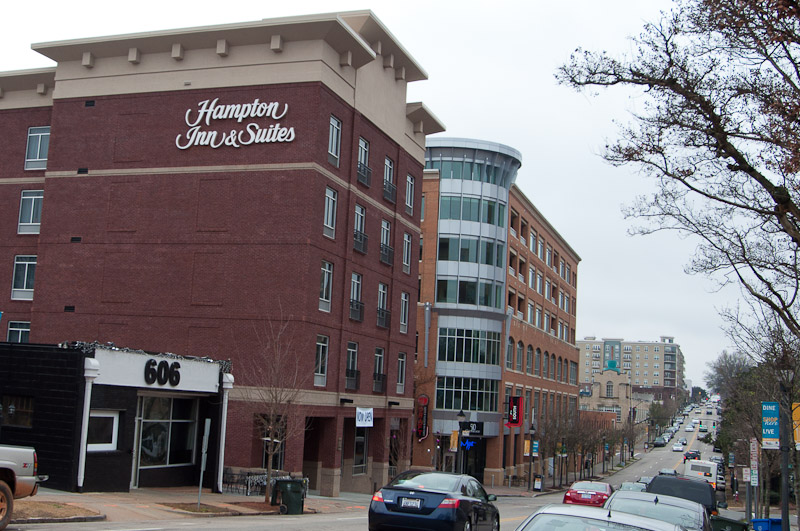
The Hampton Inn in Glenwood South

The Hampton Inn in Glenwood South

During this week’s Raleigh City Council meeting, money was approved to go towards a Downtown Hotel Market Feasibility Study. The city’s press release sums it up.

Downtown Raleigh has changed dramatically since the last hotel market study for the area was completed in 2003. The rebirth of the center city has included a return of vehicular traffic to Fayetteville Street; the openings of the Raleigh Convention Center, City Plaza and Red Hat Amphitheater; and new quality housing, office, retail and dining establishments.

The City of Raleigh considers that these new developments warrant an updated hotel market analysis for Downtown. The City Council voted unanimously today to partner with the Greater Raleigh Chamber of Commerce, Greater Raleigh Convention and Visitors Bureau, and Downtown Raleigh Alliance on funding a new Downtown hotel market feasibility study. The City will contribute $20,000 toward the $55,000 study; the remaining $35,000 will come from the three partnering agencies.

The hotel market feasibility study for the Downtown area will include site analysis, a review of rooms and public space needed, hotel type and quality recommendation, impact on the Convention Center complex, and analysis of public/private partnerships existing in the industry.

In addition to funding the hotel study, the City of Raleigh, Chamber of Commerce, Convention and Visitors Bureau, and Downtown Raleigh Alliance will design a request-for-proposals (RFP) to recruit a study consultant and analyze the results and recommendations of the study. The City plans to work with representatives of the partnering agencies in forming a steering committee to develop the RFP and work with the selected consultant to complete the study.

The Downtown hotel market feasibility study is expected to begin in March. It will take approximately four months to complete the project.

*City Council Approves Downtown Hotel Market Feasibility Study

Outside of the actual buildings that the hotels are in, there hasn’t been much discussion yet on this topic so I thought it would be good to kickstart that a bit.

Let’s start with what we have so far:

That is a total of 1,127 currently active rooms within the generally accepted downtown Raleigh borders. An upcoming project to add to that is:

  • Residence Inn at about 600 South Salisbury Street, bringing approximately 150 rooms.

The Residence Inn is the only hotel project that I know of that has any real traction. That brings our total to about 1270 rooms.

Small, but growing, is the amount of Airbnb spaces in and around downtown Raleigh. The online space-rental service is rapidly growing across the country and a quick search for Raleigh shows some options in downtown.

I bring this up as the city is currently wrestling with how to properly regulate this service. From an N&O article:

The city won’t be punishing people who offer their homes for rent on Airbnb just yet, but some members of its governing council have dug in against the Internet-powered room-rental service.

*Raleigh City Council draws debate lines on Airbnb rentals

A debate on Airbnb in Raleigh could be its own blog post but you could argue that there are mixed messages going on here. For years, city council has said that more hotel rooms are needed in downtown Raleigh. Along comes an innovative service (we’re an innovative city right?) to offer more staying options for visitors and we’re stumbling over how to handle it?

It could just be as simple as a liability discussion really but I’m not an expert on this topic. Currently Airbnb options in downtown Raleigh make up less than 2% of the available room inventory from browsing the website.

The last hotel tidbit I want to mention is the historic Sir Walter Raleigh building at the corner of Fayetteville and Davie Streets. Opened first as a hotel in 1923, it was the premier hotel for visitors in Raleigh for decades before being converted to apartments in the 1970s.

Talk of converting it back to a hotel is not new and there is a 2008 Triangle Business Journal article that describes a failed attempt at doing this:

Hopes of returning the historic Sir Walter Hotel in downtown Raleigh back to its original splendor as a showcase inn have fizzled out.

…..

Alas, the project was contingent on HUD agreeing to transfer the rent subsidy vouchers from the Sir Walter to Saint Aug’s. Despite a letter-writing and lobbying campaign by Raleigh leaders and several members of North Carolina congressional delegation, HUD never approved the swap.

*Sir Walter Hotel revival dies as feds block shift

I imagine the Sir Walter could be a very unique boutique hotel, something entirely new in downtown Raleigh at this point. The hotel market study could shed some light if downtown has enough pull to sustain a boutique hotel compared to a national brand.

Building a new hotel is probably much easier than renovating an existing one, like the Sir Walter Raleigh, but the end product could probably not be matched by any new construction for years to come if done right.
Downtown Raleigh Office Space Statistic

Here’s something that I just had to share. I found this graph very interesting. If you can’t see the embedded tweet click here.

It shows that 8.6% of office space in Raleigh is located downtown compared to other cities that we generally compete with. Raleigh’s downtown really is small for the city of our size and the reverse rush hour traffic pattern that we have is very unique.

On the flip-side, perhaps this lack of office space has allowed the residential and arts communities to grow in downtown. Something to think about.

Downtown Raleigh Plan Presentation Rundown

2014 Raleigh Downtown Experience Plan

I’m throwing this post up to kind of go over what was presented a few weeks ago at the 2014 Downtown Plan Presentation. I highly recommend watching the video but going over the high-level concepts here works too. There’s no new content in this post if you have already seen the video.

Introduction

At the start of the presentation, the presenters make it clear that at this point, the big ideas are out there but the details and the action items have not yet been finalized. We’ll have to wait for the final report to get into those.

An important keyword to remember is “Abundance” and the presenters use this often in describing what has been put together so far. By abundance, they mean that creating many experiences within close proximity only brings more value to the downtown.

A thriving city is worth more and has more value than the sum of its individual parts.

Some of the main concepts that we’ll see in the upcoming plan are:

  • Ecosystem of startups and new business types
  • Open spaces, parklets, etc.
  • Variety of housing options
  • Abundance of experiences

Importance was placed on making Raleigh unique rather than playing “catch up” with other cities. We’re at a good point in our growth period as we’re not overbuilt and don’t have old, obsolete systems in place that may hinder bringing in the new.

Accessibility was also emphasized. Downtown is great but there is more to the city than just that. Connections to and from downtown Raleigh are important so that all Raleigh denizens can take in the planned experiences.

The vision from the downtown plan’s advisory committee is to celebrate Raleigh as a hub of innovation, creativity, and entrepreneurship while maintaining authenticity and inclusiveness unlike any other city in the world.

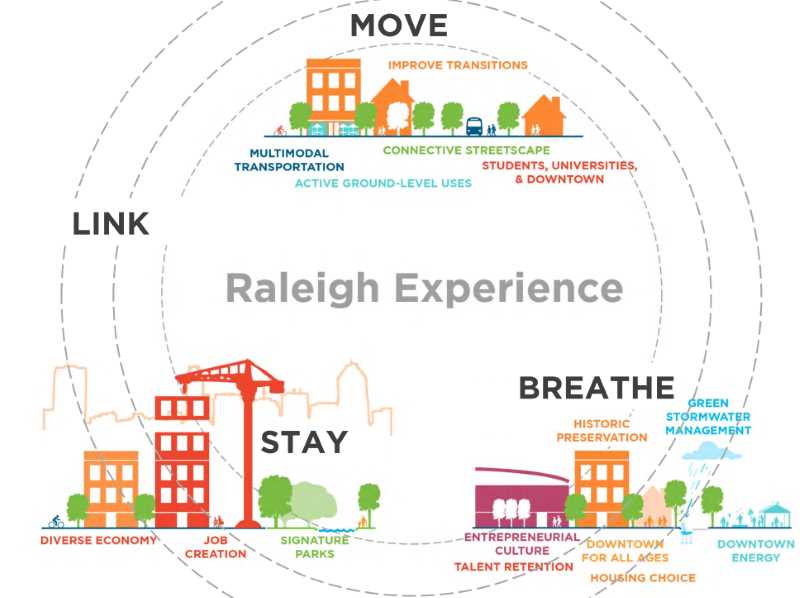
Breathe, Move, Stay, Link


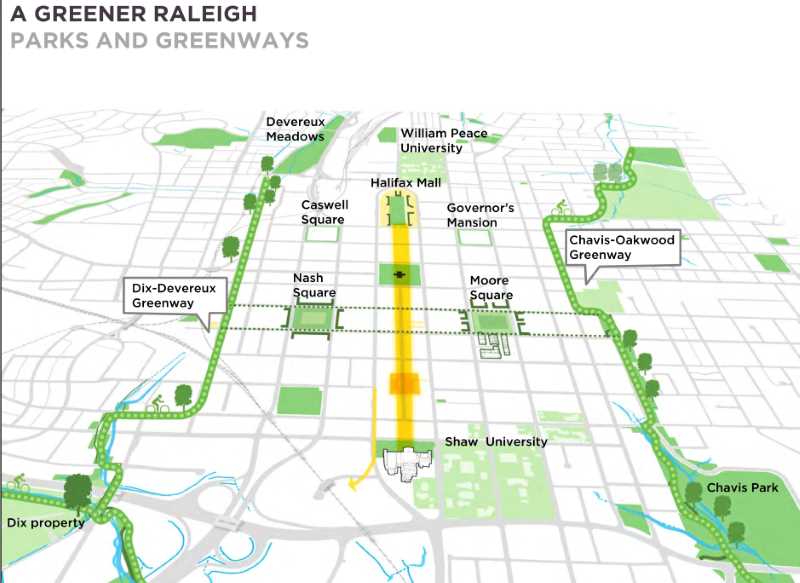
“Breathe” is the theme for creating 21st century parks, open spaces, and trails, just to name a few, that allow people to relax and enjoy the city. Focus on Nash and Moore Square as well as greenway trails through Chavis and Oakwood to the east and Devereux Meadow and Dorothea Dix to the west are proposed.


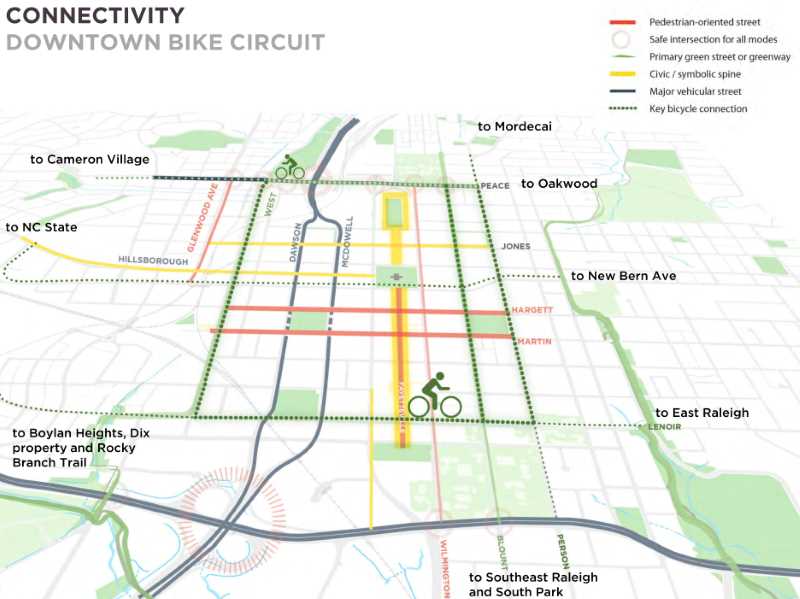
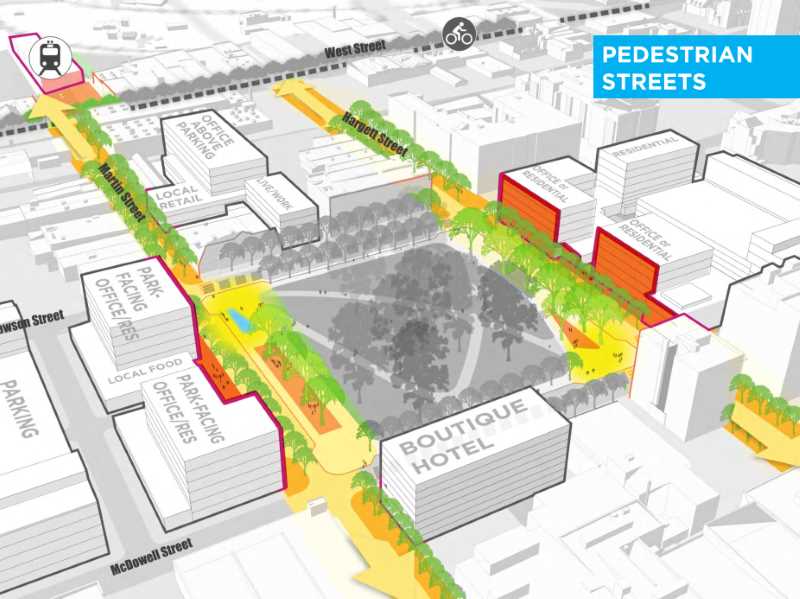
“Move” describes making over downtown Raleigh to be a model for walking, biking, and transit. Martin and Hargett Streets are identified as key pedestrian corridors and a downtown bike circuit is proposed as well.


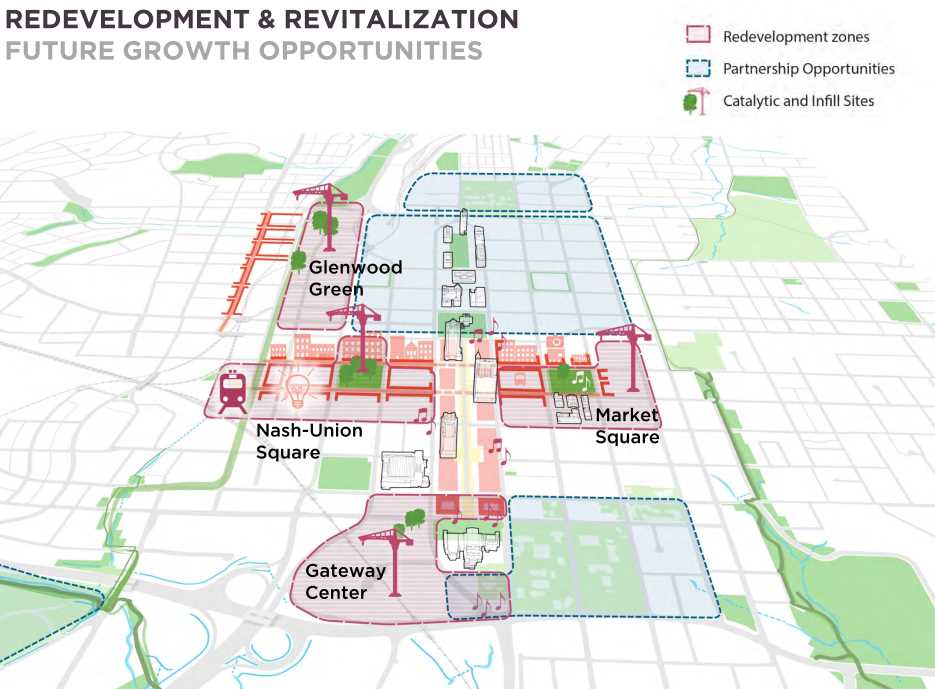
“Stay” refers to downtown’s culture and being the tourism anchor of the city. This theme will be paired with the future growth opportunities covered below.

And finally “Link” talks about partnering with neighbors in our city. Universities, private business, non-profits, and many others also have a stake in our growing downtown. They should be at the table if not already.

Four Catalytic Priorities


Nash-Union Square is the term for the area around Nash Square and the upcoming Raleigh Union Station. Transit-oriented development and pedestrian streets will be key to bringing new growth to this area. Ground-floor retail and improved streetscapes are tools to help make it happen.

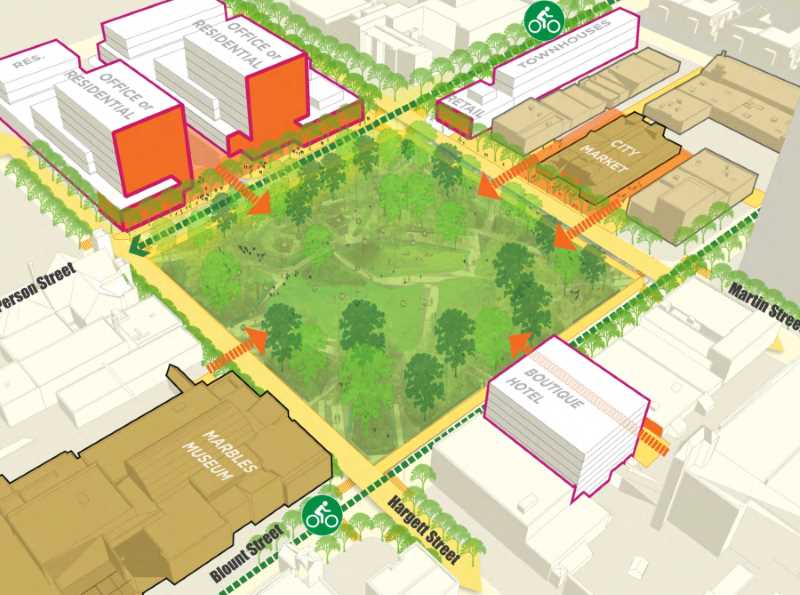
Nash Square is seen as an urban park oasis rather than the underutilized space that it is today. Activating the edges of the square will be important especially along Martin and Hargett Streets.


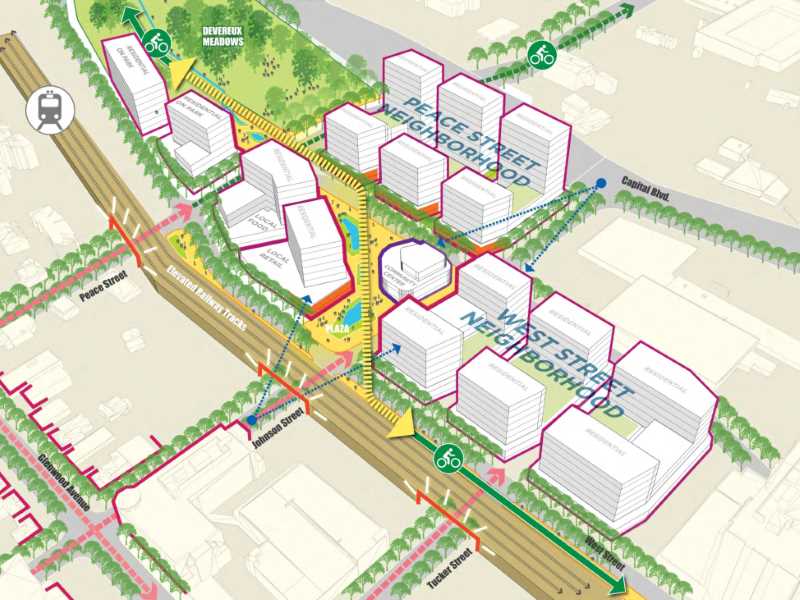
Glenwood Green is described, almost exactly, as new development for what used to be the old Smoky Hollow neighborhood before the “Urban Renewal” wave of the 1950s and 1960s cleared out this neighborhood. The area to the east of Glenwood South to Capital Boulevard could see new development around an urban greenway, parks, and urban residential buildings.

The plan suggests creating a park at Devereux Meadow as well as making new connections to the east and the south. With a possible light-rail connection nearby, this area could really be the residential epicenter of downtown.


Market Square is a fusion of City Market and Moore Square. Rather than make these two landmarks individual locations, the plan suggests to create a single area that encompasses both assets.

The plan suggests to turn the area into the premier, destination-oriented market with links to the nearby neighborhoods. The plan does tell a little of what we already know and should work on. The City Market building is underutilized, implementation of the Moore Square redesign should take place, as well as the improvements to the Moore Square Transit Center.


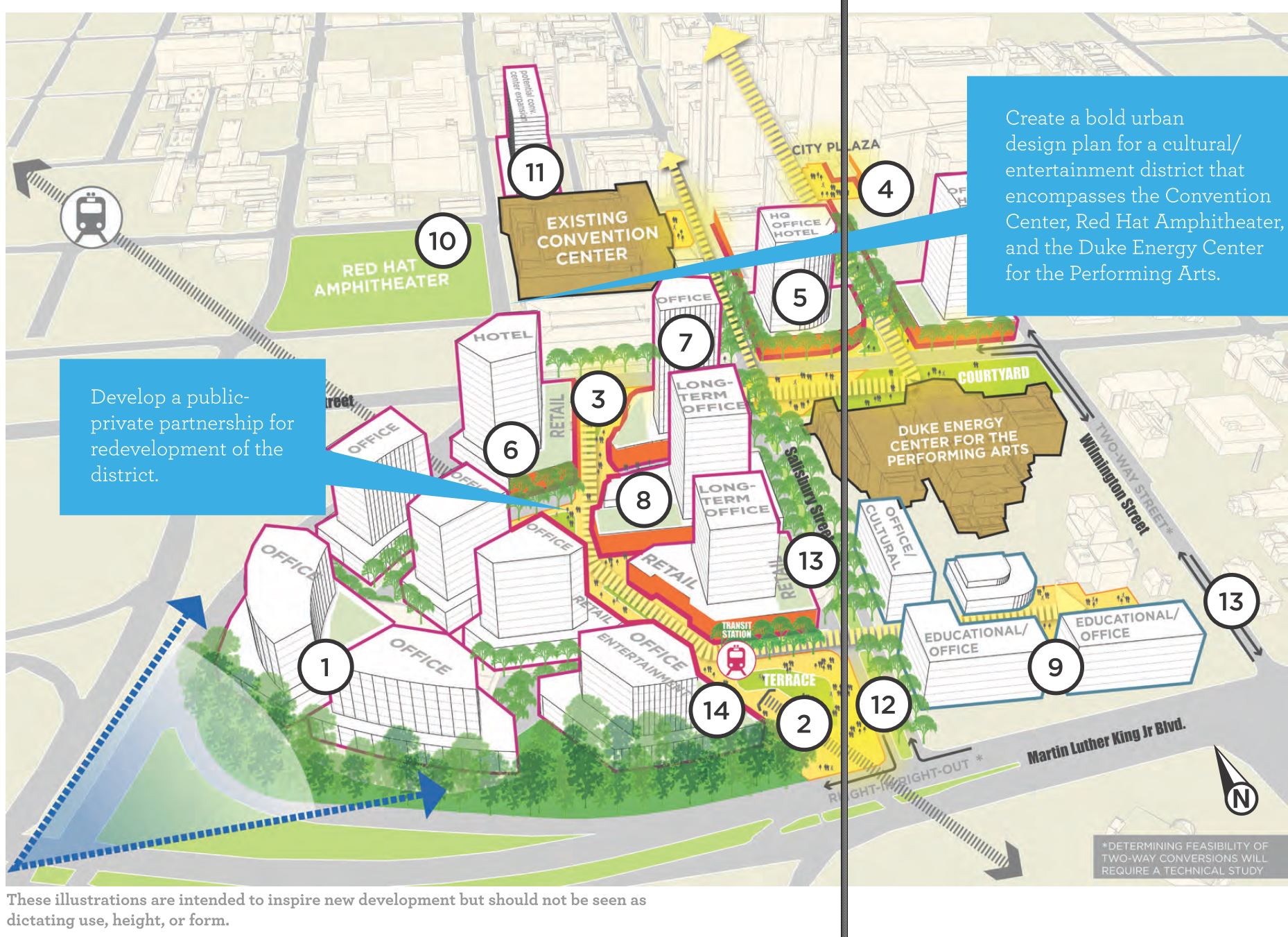
Gateway Center may be the grandest proposal in the plan. This involves the very suburban-like area to the south of the convention center adjacent to Martin Luther King Boulevard and South Saunders Street. The plan calls for pure development in this spot for a mix of uses including tourism, cultural, entertainment, and commercial.

Two big ideas are the one shown above, a campus-like setting with offices, educational institutions, and other innovation supporting entities. A second proposal in the plan shows a sporting venue wrapped with supportive retail and mixed-use development.

The R-Line

The plan presentation goes over the current state of the R-Line and possible changes to it that could address concerns. In the plan, we have:

  • Develop an optimized R-Line route to better serve existing and future Downtown riders
  • coordination with ongoing CAT system evaluation
  • Rider concentration is heavy at the Convention Center, Moore Square, and Glenwood South
  • Low ridership in the Warehouse District, New Bern, State Government, Seaboard, and Performing Arts Center

It looks like the plan wants to see the R-Line as part of a whole system, that being Capital Area Transit (CAT), rather than it’s own transit service. The new route proposals are for a shorter loop resulting in higher frequency and being complimentary to CAT bus routes.

East Cabarrus Green Street Project Brings More Sidewalks, Pavers, Peacefulness

East Cabarrus Street

East Cabarrus Street

Recently, I had the opportunity to dig into the details of the East Cabarrus Green Street Project. The city’s 2030 Comprehensive Plan includes a number of streets that have been identified as potential Green Streets and a section of Cabarrus may soon get some green upgrades.

A green street, according to the comprehensive plan, is described as one that has:

  • Pedestrian amenities
  • Landscaped planting strips where space permits
  • Wider sidewalks, bicycle lanes, and midblock crossings
  • Recommended speed limit maximums of 25 mph
  • LED street lighting
  • Innovative stormwater management facilities such as porous pavers, tree boxes, and rain gardens

All of Cabarrus has been identified as a green street in the comprehensive plan and today, there are plans for adding some of these green street items to a majority of East Cabarrus.

Starting at Wilmington Street and Cabarrus and moving east, the first plan will be to add bump outs to the intersection of Cabarrus and Blount as well as Cabarrus and Person Streets. A sketch of what that might look like is below:

East Cabarrus Street - Proposed bump outs at Blount Street.

East Cabarrus Street – Proposed bump outs at Blount Street.

The bump outs create a shorter crossing of the street for pedestrians as well as a safe place for seeing approaching cars. It also limits parked cars from being too close to the intersection, creating blind spots and potential close encounters.

This block, between Blount and Person, will also get permeable pavers where the on-street parking lanes are today. The permeable materials will filter rain water of any pollutants before reaching the ground water and therefore the nearby creeks. This is a pilot project that the city is working on and hasn’t installed something like this anywhere else so the results will be watched closely. Something similar are the sidewalks in front of the Nature Research Center or the parking lot for the AIANC building.

Continuing east, the stoplight at Cabarrus and Bloodworth will be removed and the intersection will be converted to a 4-way stop. With all cars stopping in any travel direction it makes for a more pedestrian friendly experience.

More sidewalks will be added also. The northern side of Cabarrus from East to Swain Street will get sidewalks in the public right-of-way. This is a nice addition for the Thompson-Hunter neighborhood as walking is increasing on the east side.

East Cabarrus Street - Sidewalks proposed for the northern side.

East Cabarrus Street – Sidewalks proposed for the northern side.

Finally, LED street lighting is planned for this section of Cabarrus. The hopes is that the brighter lighting will increase safety while saving costs on energy.

One final note to make is that this project spans both the Prince Hall Historic District and the Thompson-Hunter neighborhood. With the sections in Prince Hall, between Blount and Bloodworth, the Raleigh Historic District Commission (RHDC) will have to review the plans and issue a Certificate of Appropriateness for these changes. The items outside of those blocks can move forward without it.

Loose plans are to install these amenities throughout 2015.

Draft Downtown Plan Presentation on September 11

Raleigh City Plaza

Raleigh’s latest Downtown Plan has been in the works for most of the year. Public input has been collected throughout the Spring and we now have an upcoming draft that will be presented on September 11.

From my inbox to yours:

The draft Downtown Plan presentation will highlight Raleigh’s reputation and identity as a creative, innovative, and family-friendly city. Specific attention will be given to actionable catalytic projects that can accelerate economic progress in Downtown and help link the different districts of Downtown together. Visualizations of the catalytic projects will be created by using 3D models. The presentation will be conducted by the consultant team lead by Sasaki Associates.

*Draft Downtown Plan to be Presented Sept. 11

Draft Downtown Plan – Presentation

Date/Time: Thurs., Sept. 11 from 6 p.m. to 8 p.m.
Marbles Kids Museum
201 East Hargett Street
Raleigh, NC 27601
919.834.4040

Draft Downtown Plan – Open House

Date/Time: Fri., Sept. 12 from 9 a.m. to 5 p.m.
City of Raleigh Museum
220 Fayetteville Street
Raleigh, NC 27601
919.996.2220

City Works Through The 2014 Downtown Plan

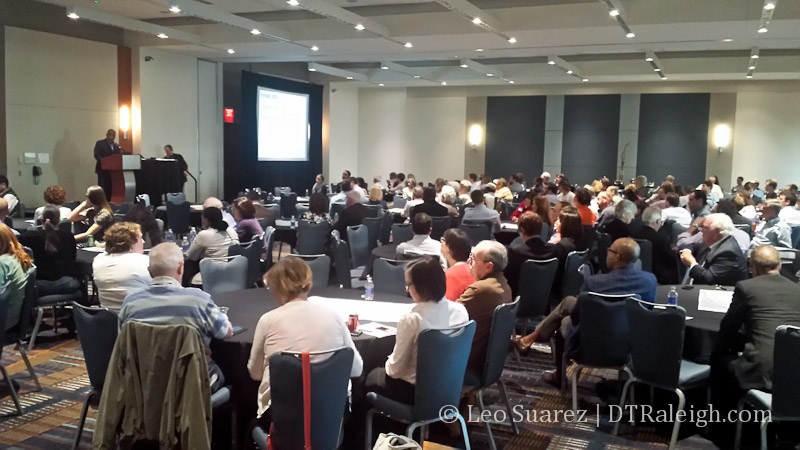
Downtown Plan kick-off event at the Raleigh Convention Center.

For those that are not aware, city planning is working with a consultant group to create the next downtown Raleigh plan. This plan will consist of a vision for downtown Raleigh and what it could look like in 10 years. Key to it are achievable goals based around a heavy amount of public input.

Recently, the public kick-off event took place at the Convention Center and a good crowd of about 150 residents and business owners met to throw around ideas for the new plan. Downtown as a whole was looked at and from my experience a few themes were clear:

  • Create goals that are achievable in under 10 years.
  • Connectivity between districts and outside of downtown is important.
  • Create more experiences in the downtown.

The achievable goals piece seems to be borrowed from the last downtown plan, The Livable Streets plan from approximately 2002. That plan had 5 clear objectives and a path on how to execute them. Goals like building a new convention center and remaking Fayetteville Street were laid out clearly. Planners wanted to avoid lofty goals, which could sound like “create more meeting space in downtown Raleigh” or “revitalize a core street to be downtown’s Main Street.” The clearer goals in that plan were felt to be part of the success we’re seeing now and is hoped to be repeated in the new plan.

This new plan is being lead by a consultant group, Sasaki Associates Inc. from Boston, and with the help of a local advisory committee, consisting of residents from a variety of backgrounds, as well as public input they will release the plan later this year. Make sure to jump to the city’s website to see more details on the consultants and the local advisory committee.

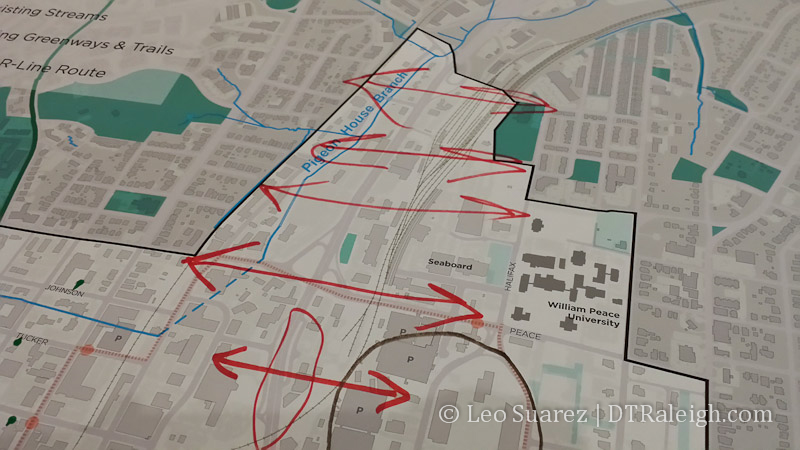
Coming back to the kick-off meeting, participants were taken through a few group exercises to try and get their ideas for downtown Raleigh. We rewrote the downtown mission statement. We drew all over a map, highlighting areas needing attention, open space, or improved connectivity. Our group also listed our top three ideas for downtown, adding them to a list with the other groups’ and later voting on the best ones.

Downtown Plan kick-off event at the Raleigh Convention Center.

Our group wanted more connectivity across Capital Boulevard.

These ideas and maps will be taken by the consultants for input into the final plan. No need to worry if you have not submitted any ideas yet. Here is how you can participate online now and look out for the next meeting.

Mindmixer
The city has set up a website using Mindmixer to allow you and I to submit ideas, vote on others, and add comments around a few central downtown themes. The site is up right now and there is a fair amount of activity on it. Jump over to it and start submitting.
Planning for Raleigh via Mindmixer.

District Sessions
The next in-person meetings for the downtown plan will be on May 21 and 22. The visioning sessions will consist of similar breakout exercises to the event in early April but focus only on the district being discussed. Here’s the schedule for each session:

District Visioning Sessions for Downtown Plan

Capital District
Date/Time: Wed., May 21 from 8:30 am to 10 am
AIA NC Building, 14 E. Peace St.
Moore Square District
Date/Time: Wed., May 21 from 3 pm to 5 pm
Cobblestone Hall, City Market, 215 Wolfe St.
Glenwood South
Date/Time: Wed., May 21 from 7 pm to 9 pm
Hampton Inn Hotel, 600 Glenwood Ave.
Fayetteville Street District
Date/Time: Thurs., May 22 from 2 pm to 4 pm
The Stockroom, 230 Fayetteville St., second floor
Warehouse District
Date/Time: Thurs., May 22 from 4:30 pm to 6:30 pm
HQ Raleigh, 310 S. Harrington St.
Person Street/Seaboard
Date/Time: Thurs., May 22 from 7 pm to 9 pm
AIA NC Building, 14 E. Peace St.

As always, the city’s main site for this whole project has it all and is constantly updated as new information is available. This is the first place to look for information.

Downtown Experience Plan via City of Raleigh.

Weekend Reel: Downtown Plan

Email readers: This blog post has embedded video. Read the post on the blog to see them.

Downtown Plan on YouTube

In the quick video above, Raleigh Planning Director Mitchell Silver introduces the ongoing Downtown Plan and why the city is undertaking this effort.

In the next video, we have the presentation given by Mr. Silver and the design firm, Sasaki Associates, at the Downtown Plan Kick-Off meeting that took place back in February of this year.

Raleigh Downtown Plan Kick-Off on YouTube

Make sure to keep an eye out for the next public meeting on April 2.

Downtown Plan – City of Raleigh