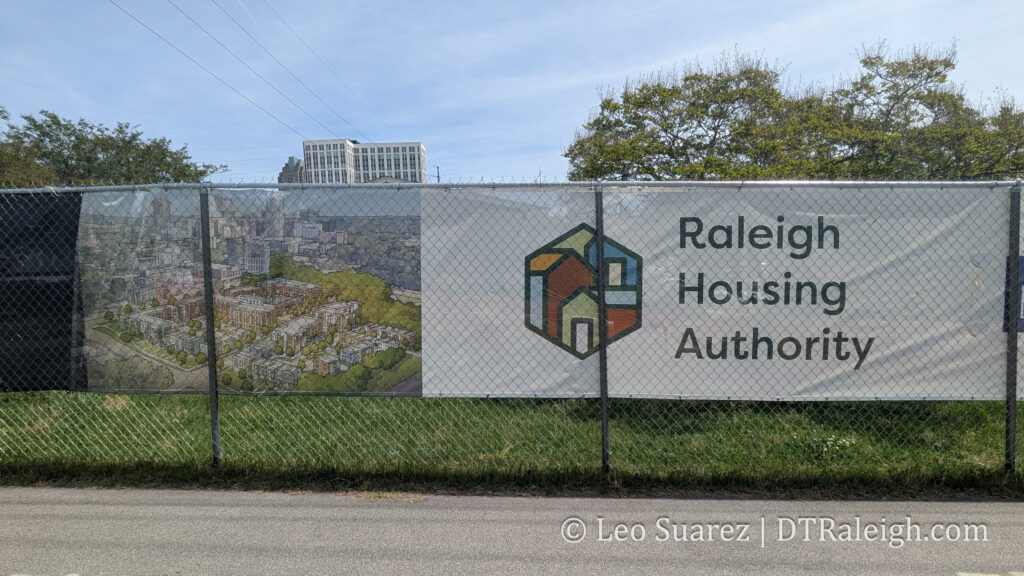
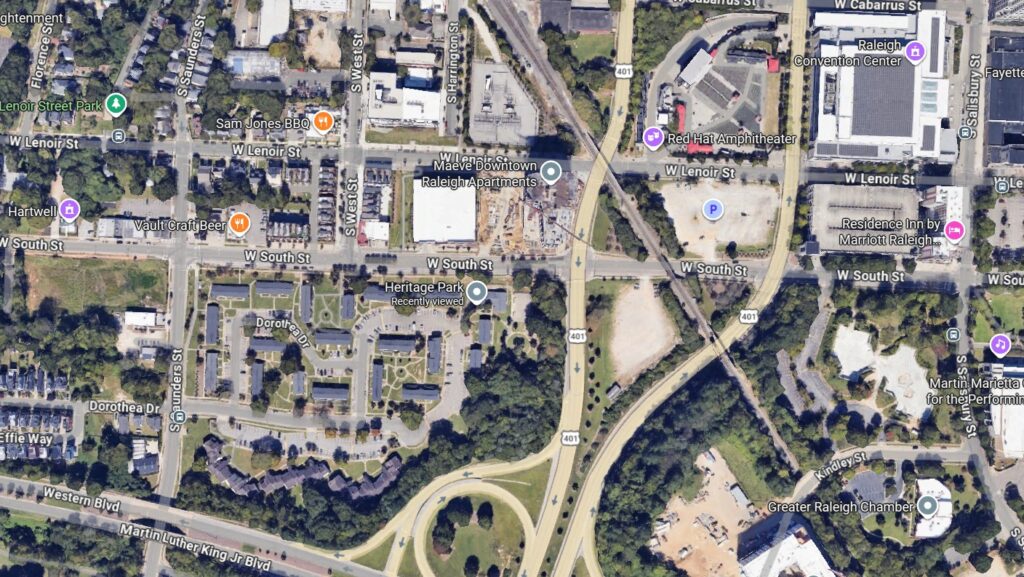
If you’ve walked or biked along the western side of South Street recently, you’ve probably noticed the activity around Heritage Park. The 11-acre affordable housing community is being demolished and rebuilt from the ground up. The story of how the Raleigh Housing Authority (RHA) is handling it is worth paying attention to. This isn’t just a construction project. It’s a test of whether Raleigh can do urban redevelopment without repeating the mistakes that destroyed communities in this exact part of the city decades ago.
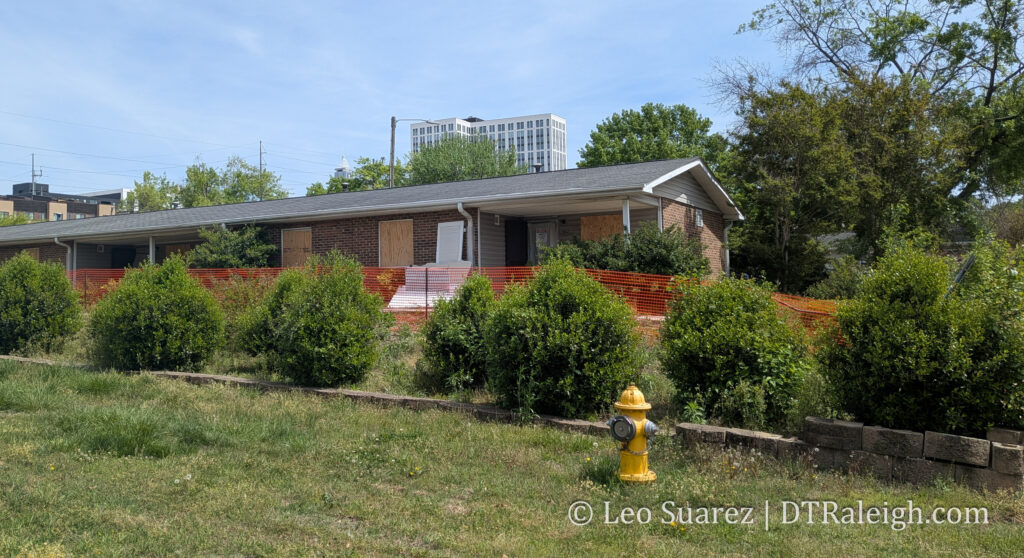
Heritage Park was built as part of the urban renewal era of the 1970s. 122 units of public housing on nearly 12 acres at the edge of downtown were constructed after the clearing of established neighborhoods. The current buildings have aged badly. Decades of underfunding by the federal government have left them outdated, deteriorating, and expensive to maintain. The RHA looked at the situation and concluded this wasn’t a renovation job. The buildings need to come down and be replaced with something better.
I had a chance to sit down (virtually) with RHA CEO Ashley Lommers-Johnson and Kenya Pleasant, the director of RHA’s development department, in early April to talk through what’s happening and what’s coming. The scope of what they’re planning is pretty big and worth noting.
The Fourth Ward Context
You can’t talk about Heritage Park without talking about Raleigh’s Fourth Ward.
The name itself goes back to 1866, when voting districts were drawn specifically to dilute Black political power. But Fourth Ward became something much more than a line on a map. It grew into a Black working-class neighborhood with real political leverage, where the community built its own churches, schools, businesses, and hospitals despite the lines drawn around it.
Then urban renewal came through and tore large parts of it apart.
That history hangs over any redevelopment in this area. The RHA knows it, and to their credit, they’ve built their entire approach around acknowledging it. Lommers-Johnson told me there was real hesitation among residents — a historical wariness rooted in the experience of being told “we’re building this and that’s what you get.” The RHA’s approach this time has been fundamentally different: working with residents on what should be there, not handing them a finished plan.
If you want to learn more about the Fourth Ward’s history, here are two excellent resources:
- The Fourth Ward Story Map — a detailed, visual history of the neighborhood and its significance
- The Fourth Ward History Project archive — a deeper collection of records and context
Getting the Relocation Right
Here’s where the RHA deserves real recognition. Relocating 100-plus households out of the only home many of them have known is incredibly difficult work, especially when the community has every historical reason to distrust the process.
The RHA’s top concern, based on their conversations with residents, was about the moving process itself. So they built a plan around it. Residents were connected with new housing that accepts subsidies, with the option to return to Heritage Park once the new units are built or to stay where they landed if they preferred.
As of July 2025, every resident has been successfully relocated. The RHA reports that 36% of residents moved into brand-new construction homes. The satisfaction numbers from their resident survey are strong: 97% felt staff treated them with respect, 94% said they were well-informed and had the chance to ask questions, and 80% reported being satisfied or extremely satisfied with their new housing.
The National Association of Housing and Redevelopment Officials (NAHRO) recognized the effort with an Awards of Merit nomination for Excellence, noting that the RHA had to essentially invent a new relocation process and program from scratch. They set a goal of zero 90-day eviction notices during the process, and they hit it. They built a new relocation team specifically staffed with people who had a track record of respectful service. They created a new project-based voucher program that opened up high-quality, brand-new housing to the majority of residents.
What’s Happening Now and What’s Coming
Now for the development side, which is where things get exciting from a downtown growth perspective.
Right now, demolition of the existing buildings is underway, expected to wrap up by the end of June. The RHA is simultaneously working through site plan review for Phase 1, which targets the northeast corner of the site. The plan calls for a 5-story, mixed-use building with 50 senior housing units. The goal is to start construction on Phase 1 (labeled 1C in the diagram below) before the end of 2026.
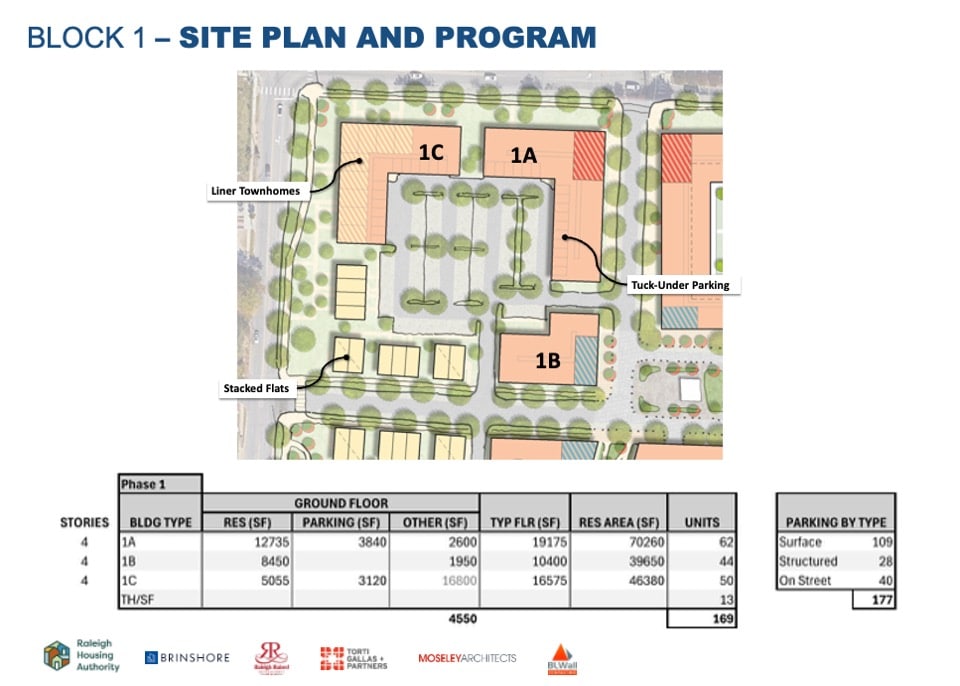
The entire property sits within the Transit-Oriented Development (TOD) overlay, and the design takes advantage of that. Meanwhile, a rezoning case (Z-19-25) is working its way through the process to rezone the full Heritage Park site from RX-3 with TOD — residential mixed-use with a 3-story height limit — to DX-12-CU with TOD, which is downtown mixed-use with a 12-story height limit. That rezoning would unlock the density needed for the full build-out, though Phase 1 is designed to move forward under the current zoning if needed.
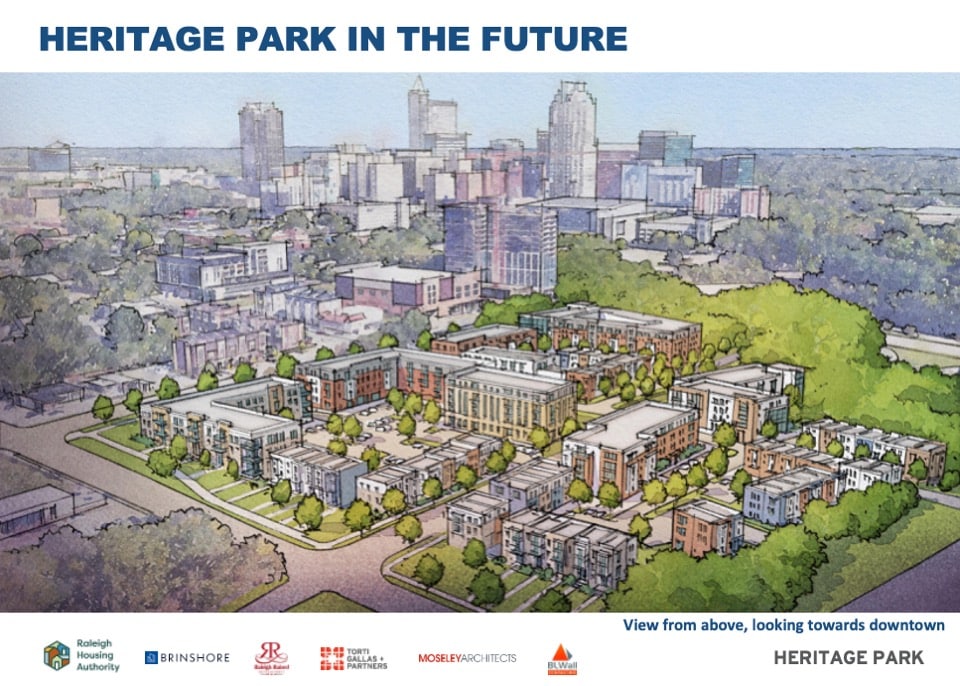
The long-term vision is up to 1,000 units across the entire Heritage Park property, with mixed-use space woven in. The RHA is committed to at least a 1:1 replacement of the original 122 affordable units, but the goal is to go beyond that and increase the total number of affordable homes on the site.
The property will also get better connected to the surrounding street grid, with plans for West Street to extend south and link up with Dorothea Drive. That matters. One of the problems with a lot of older public housing is that it was designed to feel separate. Superblocks, dead-end streets, no through-connections. Heritage Park shouldn’t feel like an island. It should just be more downtown, where people walk to the corner store or catch a bus the same way everyone else does. Extending the grid through the site is how you make that happen.
This Is Worth Following
One thing Lommers-Johnson shared that stuck with me: when he started as RHA CEO, what stood out about Raleigh was how public housing is distributed across the city rather than concentrated in one area. Large single-family homes sit across the street from public housing developments. He said people here seem more accepting of having affordable housing in their neighborhoods compared to other cities he’s worked in.
That’s a good foundation. Heritage Park’s redevelopment is a chance to build on it. Dense, mixed-income, mixed-use housing on the edge of downtown, designed around transit access, replacing aging units that no longer serve anyone well. More affordable units than before, not fewer. And a community engagement process that other housing authorities are now looking at as a model.
This is what good urban redevelopment looks like. It’s slow, it’s complicated, and it requires spending years building trust before you ever pour concrete. But if the RHA can pull off the full build-out of Heritage Park, Raleigh will have a showcase for how to do public housing right in a growing city.
I’ll be following this project closely as demolition wraps up and construction gets underway. More to come.
Comments
Comments are disabled here. That's because we're all hanging out on the DTRaleigh Community, an online forum for passionate fans of the Oak City.